How Much Does a Ford 3000 Tractor Weigh?
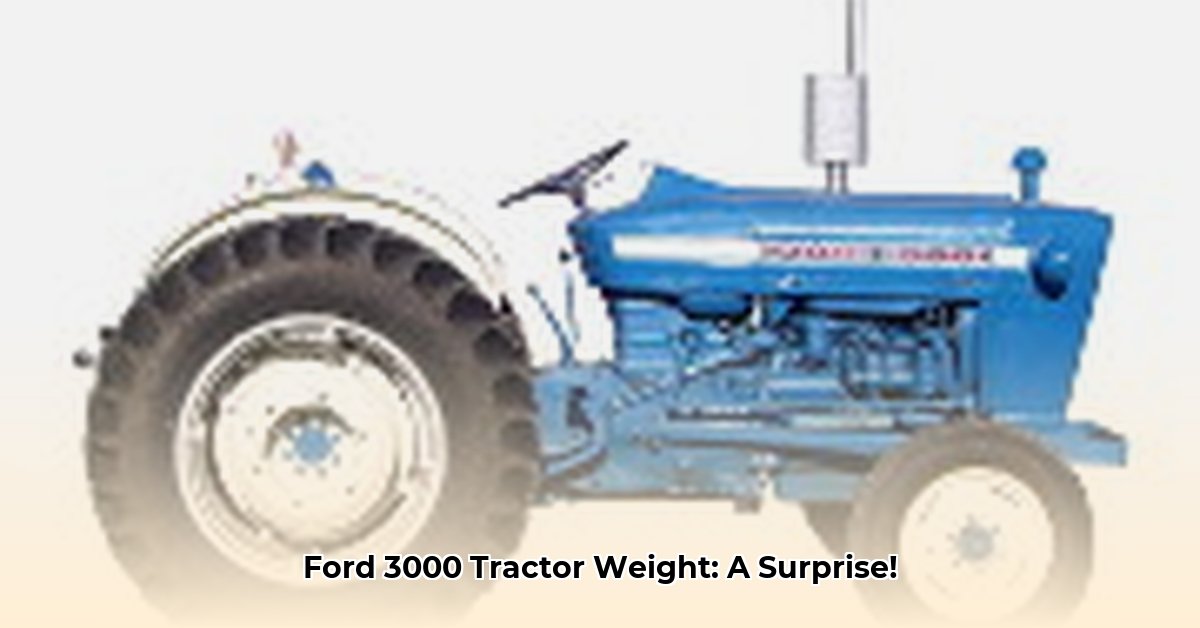
The weight of a Ford 3000 tractor isn't a single number. It varies depending on the specific model and any added attachments. Generally, expect a weight ranging from 3,000 to 4,000 pounds. Think of it like this: a basic model is roughly comparable to a small car, while one with a front-end loader or other implements will naturally weigh more. This weight, however, tells only part of the story. For battery information, see this helpful resource.
A Piece of Farming History: The Ford 3000's Enduring Legacy
Manufactured between 1965 and 1975, the Ford 3000 wasn't just another tractor; it was a workhorse. Its robust build and impressive weight reflect its power and capability, suitable for a wide range of farm tasks. The number of these tractors still in operation today speaks volumes about their quality – a testament to an era when “built to last” wasn't just marketing jargon. This longevity is key to understanding the Ford 3000's surprising relevance in the discussion of sustainable agriculture.
Built to Endure: Design and Durability
The longevity of the Ford 3000 is a direct result of its design. Its straightforward mechanical design, with fewer electronic components than modern counterparts, meant fewer points of potential failure. The tractor's heavy-duty construction and readily available parts further enhance its repairability and lifespan. This translates directly into a significantly smaller environmental footprint compared to constantly replacing machinery. Less waste, less manufacturing, and less transportation--all hallmarks of sustainable practices.
Adaptability: A Versatile Workhorse
The Ford 3000 wasn't a one-trick pony. Various models, such as the 3100, 3300, and 3310, were designed for various tasks. This adaptability meant farmers avoided the need for a fleet of specialized machines, leading to significant fuel savings and reduced storage space requirements. This efficiency further contributes to its sustainable nature. One machine, many jobs – a simple yet impactful concept.
Fuel Efficiency and Sustainable Farming: The Ford 3000's Unsung Role
While precise fuel efficiency data for a vintage Ford 3000 is hard to come by, its remarkable lifespan significantly influences its sustainability. Less frequent replacements translate to reduced manufacturing emissions, less material waste, and decreased transportation needs. It exemplifies the principles of "reduce, reuse, recycle" in a tangible way. Consider the carbon footprint saved by decades of use compared to the constant cycle of purchasing and discarding newer machines.
Old-School vs. New-Tech: A Comparison
Modern tractors are technological marvels, but this sophistication sometimes comes at the cost of repairability. Complex electronics can lead to expensive repairs or replacements. The Ford 3000's simplicity, however, is its strength. Basic mechanical problems were often fixed with readily available parts and standard tools, unlike many modern machines which require specialized tools and skilled technicians. This raises a crucial question: Is the trade-off between advanced technology and ease of repair ultimately a sustainable path?
The Weight of History: Concluding Thoughts
The Ford 3000's legacy extends far beyond its weight. Its remarkable durability, adaptability, and repairability make it a compelling model of sustainable agriculture. Its story encourages us to consider the impact of our consumption habits and to value products that prioritize longevity over fleeting technological advancements. The weight of a Ford 3000 is not merely a measure of mass; it's a testament to thoughtful design and a sustainable approach to technology.